
What Camera Should I Buy Under $1,000

Sep
What Camera Should I Buy Under $1,000? Best 2026 Picks
Quick Answer: The Best Cameras Under $1,000
If you want the best camera under $1,000 primarily for YouTube, vlogging, and video creation, the Sony ZV-E10 II is the strongest choice because of its 10-bit 4:2:2 recording, 4K 60p video, class-leading autofocus performance, and expansive Sony E-mount lens selection. For beginners who prioritize photography and want a built-in electronic viewfinder, the Canon EOS R50 is the better choice. For sports, wildlife, and fast action, the Canon EOS R10 offers faster mechanical burst shooting and superior physical controls.
| Camera Model | Best For | Standout Reason |
| Sony ZV-E10 II | Video & YouTube | Best creator-focused features, 10-bit 4:2:2, massive lens selection |
| Canon EOS R50 | Beginners & Travel | Best overall value, intuitive touchscreen, built-in OLED viewfinder |
| Canon EOS R10 | Sports & Action | 23 fps burst shooting, twin control dials, deep ergonomic grip |
| Nikon Z30 | Vlogging & Streaming | Rugged build, long continuous recording times, comfortable grip |

Navigating the entry-level camera market can be challenging. With modern smartphones incorporating heavy computational photography, spending money on a dedicated camera only makes sense if the hardware provides a distinct leap in optical clarity, dynamic range, genuine subject isolation, and manual control.
The sub-$1,000 price bracket represents the ultimate sweet spot for aspiring photographers, videographers, and content creators. At this tier, modern mirrorless technology delivers capabilities that were exclusive to high-end professional cinema rigs only a few years ago.
However, selecting the wrong camera body can quickly lead to frustration. A device designed strictly for handheld vlogging will disappoint someone trying to capture fast action at a sporting event, while a photography-first body might lack the video bit-depth and audio monitoring connections required by a serious filmmaker.
We compare official specifications, key features, pricing considerations, and real-world use cases to help you choose the right camera. Whether you are building your first YouTube studio or upgrading your travel photography, this comprehensive shopping guide will help you choose the exact tool for your creative journey.
What Makes a Great Camera Under $1,000?
Before evaluating individual camera models, it is essential to understand what technical specifications dictate performance in this price category. Most cameras under $1,000 utilize an APS-C sensor configuration, available either as a body-only purchase or packaged with a starter zoom lens.
Sensor Architecture and Low-Light Realities
An APS-C sensor is substantially larger than the image sensors used in most smartphones, giving photographers more control over depth of field, low-light performance, and image rendering.
- Light Gathering: The physically larger surface area gathers more light, minimizing digital grain and noise when shooting in dimly lit rooms or outdoors at dusk.
- Natural Optical Bokeh: A larger sensor produces authentic optical shallow depth of field, separating your subject cleanly from the background without relying on artificial software blur algorithms.
Next-Gen Autofocus and Subject Recognition
Modern autofocus systems have evolved beyond basic point tracking. Industry leaders now implement deep-learning artificial intelligence trained to detect, lock onto, and track subjects across the frame. When buying a modern camera, prioritize systems that offer real-time eye tracking for humans, animals, and moving vehicles.
Video Codecs and 10-Bit Color Depth
If video is central to your workflow, basic 8-bit recording can introduce color banding in skies and gradients. Today, 10-bit recording provides 1,024 tonal values per color channel, giving editors significantly more flexibility when grading footage in post-production. Furthermore, oversampled 4K video (where a sensor captures at 5K or 6K and scales down to 4K) delivers significantly crisper results than standard line-skipped video.
Lens Mount Flexibility and Upgrade Paths
A camera body is only half of the imaging equation. The glass attached to the front defines the perspective and character of your photos. Consider the wider camera lenses selection available for each mount. Choosing a platform that supports a wide range of affordable third-party lenses (such as Sigma and Tamron) alongside first-party glass ensures you can expand your kit over time without needing to replace your camera body.

Which Camera Should You Buy? (Quick Decision Tree)
To help you decide immediately without getting lost in technical jargon, use this straightforward breakdown:
- Choose the Sony ZV-E10 II if: Your main priority is YouTube, vlogging, social media video, and product reviews. You need professional 10-bit 4:2:2 video codecs, unlimited recording times, and access to the largest third-party lens catalog on the market.
- Choose the Canon EOS R50 if: You are a complete beginner who wants a compact, lightweight hybrid camera. You prioritize family, travel, and portrait photography, want a built-in eye-level viewfinder, and prefer an intuitive touchscreen interface.
- Choose the Canon EOS R10 if: You shoot fast-moving action, sports, or wildlife. You need rapid burst shooting up to 23 fps, physical control dials, a deeper handgrip, and customizable shortcut buttons.
- Choose the Nikon Z30 if: You want a durable, highly ergonomic camera for vlogging, tabletop streaming, and daily video production at a very accessible price point.
Our Recommended Picks at a Glance
- Best for YouTube & Video: Sony ZV-E10 II Mirrorless Camera
- Best for Beginners & Travel: Canon EOS R50 Mirrorless Camera
- Best for Sports & Action: Canon EOS R10 Mirrorless Camera
- Best Budget Creator Option: Nikon Z30 Mirrorless Camera
Top Mirrorless Cameras Under $1,000 Ranked and Reviewed
Here are some of the strongest mirrorless cameras available under $1,000, evaluated across resolution, autofocus accuracy, build ergonomics, and video performance.
1. Sony ZV-E10 II: The Best Camera Under $1,000 for YouTube and Video
The Sony ZV-E10 II is widely considered the benchmark for video creators, vloggers, and solo shooters. It inherits the high-end 26.0-megapixel back-illuminated Exmor R CMOS sensor found in professional cinema bodies, bringing high-end image fidelity into a sub-$1,000 package.
- Video Specifications: Records 5.6K-oversampled 4K video at up to 60p with internal 10-bit 4:2:2 color sampling and S-Log3 gamma support.
- Autofocus Performance: 759 phase-detection points cover 94% of the image sensor, backed by Real-time Eye AF for humans, animals, and birds.
- Battery Upgrade: Now powered by the high-capacity Sony NP-FZ100 battery, delivering more than double the operating time of the original ZV-E10.
- Pros: Broadcast-grade 10-bit color; incredible battery endurance; massive selection of native and third-party Sony lenses; directional 3-capsule microphone with included windscreen.
- Cons: Lacks an electronic viewfinder (EVF); relies on digital image stabilization rather than in-body sensor shift.
- Who It Is For: Creators who prioritize video, vlogging, streaming, and cinematic B-roll with color grading flexibility.
- Who Should Avoid It: Dedicated still photographers who need an eye-level viewfinder to compose shots in direct sunlight.
2. Canon EOS R50: The Best Beginner Camera Under $1,000 for Photography
For newcomers who want an intuitive camera that delivers stunning images straight out of the box, the Canon EOS R50 is one of the most capable and user-friendly tools on the market.
- Sensor & Processing: Pairs a 24.2-megapixel APS-C CMOS sensor with Canon’s flagship DIGIC X processor.
- Autofocus Power: Features Dual Pixel CMOS AF II with advanced subject recognition algorithms derived from professional sports cameras.
- Burst Shooting: Reaches up to 15 frames per second using the electronic shutter, making it great for candid family moments and pets.
- Video Capture: Records uncropped 4K video at up to 30p, oversampled from a full 6K sensor capture for sharp details.
- Pros: Extremely lightweight and compact; intuitive touchscreen menu; bright 2.36-million-dot OLED viewfinder; renowned natural skin tone rendering.
- Cons: Limited native RF-S lens selection; video recording is restricted to standard 8-bit color in standard profiles; smaller battery capacity.
- Who It Is For: Beginners, families, travelers, and hobbyist photographers who want an easy-to-use camera with an eye-level finder.
- Who Should Avoid It: Advanced videographers requiring 10-bit Log profiles or professionals who need dual memory card slots.
3. Canon EOS R10: The Best Action and Wildlife Pick Under $1,000
Sitting right at the top edge of the $1,000 threshold (frequently found body-only or discounted in promotional bundles), the Canon EOS R10 bridges the gap between consumer entry models and serious professional gear.
- Rapid Speed: Captures up to 15 fps with its mechanical shutter, and up to an astonishing 23 fps with the silent electronic shutter.
- Manual Controls: Features dual top-plate control dials for simultaneous shutter and aperture adjustments, paired with an AF joystick.
- Video Capabilities: Shoots 4K 30p oversampled from 6K with zero crop, and supports 4K 60p (with a 1.56x crop factor) for slow motion.
- Pros: Deep ergonomic handgrip; rapid mechanical burst shooting; reliable Dual Pixel AF II tracking; built-in pop-up flash for quick fill lighting.
- Cons: No in-body image stabilization; plastic chassis construction; single UHS-II card slot.
- Who It Is For: Enthusiasts wanting to photograph fast-moving sports, birds, and automotive action without spending professional budgets.
- Who Should Avoid It: Shooters on a strict $1,000 budget who still need to purchase multiple accessories alongside the body.
4. Nikon Z30: The Best Budget Creator and Streaming Option
Nikon engineered the Nikon Z30 specifically for content creators who find smartphone video limiting. It removes the electronic viewfinder to prioritize compact handling, cooling efficiency, and audio-visual recording.
- Sensor & Video: Houses a 20.9-megapixel DX-format CMOS sensor capable of uncropped 4K video at up to 30p and 1080p slow motion at 120p.
- Creator Build: Features a prominent front tally recording lamp, a fully articulating vari-angle touchscreen, and long recording times up to 125 minutes in 1080p.
- Pros: Excellent build ergonomics with a secure, comfortable grip; high-quality built-in stereo microphone; accessible price point that leaves room for lenses.
- Cons: No electronic viewfinder; lacks sensor-shift stabilization; 20.9MP offers slightly less cropping room for high-res photo editing.
- Who It Is For: Lifestyle vloggers, desktop streamers, and budget-minded creators seeking a durable, comfortable video camera.
- Who Should Avoid It: Dedicated landscape or fine-art still photographers who prefer composing through an eye-level finder.
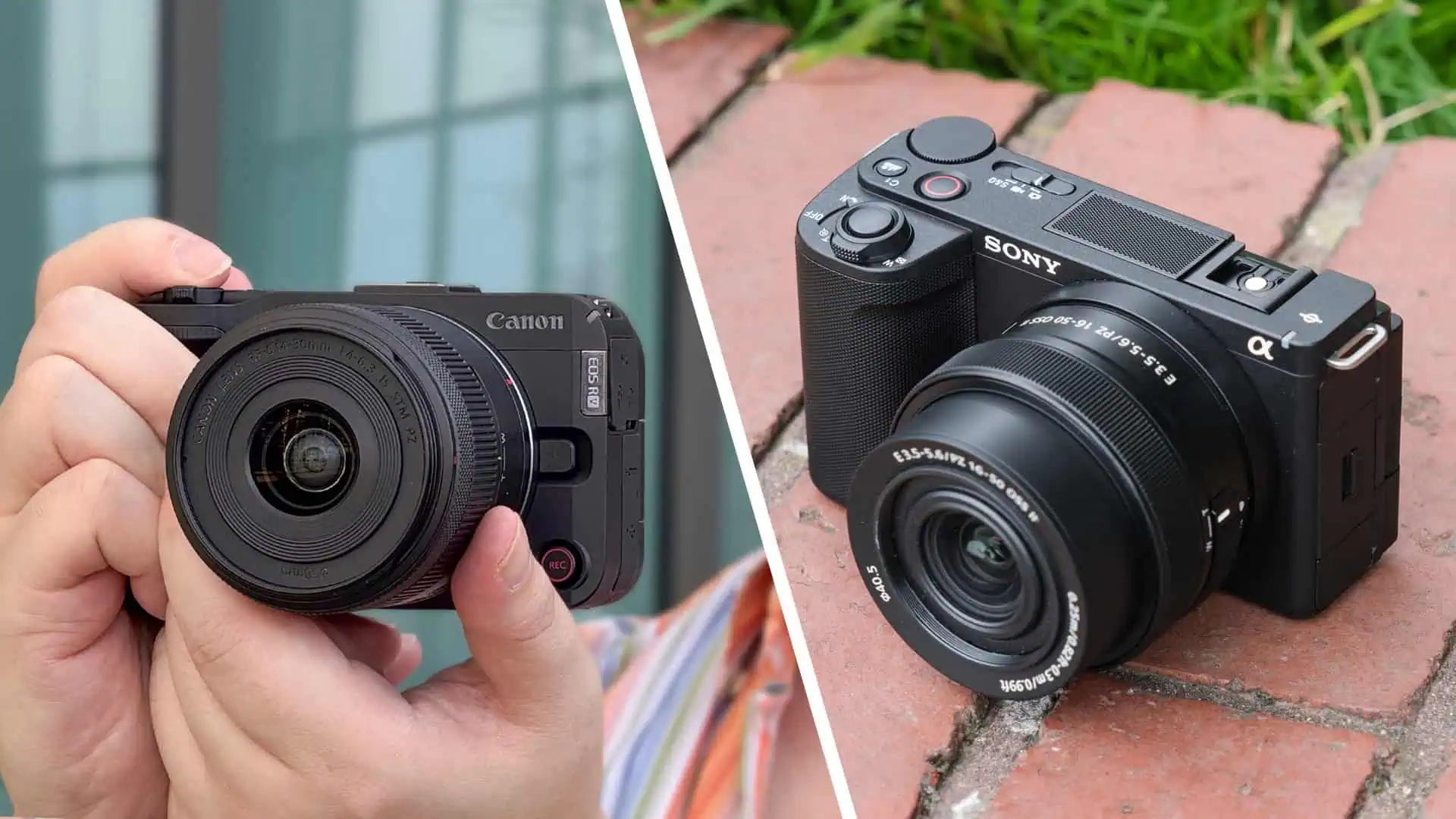
Direct Comparison: Which Camera Should I Buy Under $1,000?
To evaluate these options side by side, review this direct specification comparison:
| Feature | Sony ZV-E10 II | Canon EOS R50 | Canon EOS R10 | Nikon Z30 |
| Sensor Resolution | 26.0 MP BSI APS-C | 24.2 MP APS-C | 24.2 MP APS-C | 20.9 MP APS-C |
| Max Video Resolution | 4K 60p (10-bit 4:2:2) | 4K 30p (8-bit) | 4K 60p (cropped) | 4K 30p (8-bit) |
| Max Burst Shooting | 11 fps | 15 fps (electronic) | 23 fps (electronic) | 11 fps |
| Electronic Viewfinder | No | Yes (2.36M-dot OLED) | Yes (2.36M-dot OLED) | No |
| Battery Life (CIPA) | Approx. 610 shots | Approx. 370 shots | Approx. 450 shots | Approx. 330 shots |
| Lens Selection | Massive (E-Mount) | Growing (RF-S / RF) | Growing (RF-S / RF) | Moderate (Z-Mount) |
Should I Buy a Camera or Use My iPhone?
Smartphones are fantastic for spontaneous snaps, but dedicated mirrorless cameras offer mechanical and optical advantages software cannot replace:
- Interchangeable Optics: You can mount an ultra-wide zoom, a telephoto lens, or a macro lens to capture optical perspectives impossible on a smartphone.
- True Low-Light Performance: Larger sensors collect clean, uncompressed photons of light, avoiding the smeary noise reduction common in computational night modes.
- Ergonomic Control: Physical dials allow you to change shutter speed, aperture, and ISO instantly without looking at a screen.
Is Sony Better Than Canon Under $1,000?
The answer depends on whether your focus is video or photography:
- Sony leads in video and lenses: The Sony ZV-E10 II dominates video with 10-bit color, superior battery runtime, and a huge selection of affordable third-party lenses from Sigma, Tamron, and Samyang.
- Canon leads in out-of-camera color and photo handling: The Canon EOS R50 and R10 provide integrated electronic viewfinders, intuitive touch menus, and skin tone reproduction that many portrait shooters prefer straight out of the camera.
How to Build a Complete Creator Kit Under $1,000
Purchasing just a camera body is only the first step. High production value requires addressing sound, stability, and memory. Here is how to allocate a $1,000 budget effectively:
- The Camera Body & Lens ($650 – $800): Start with a body like the Canon EOS R50 kit with the 18-45mm lens, or a Sony ZV-E10 II body paired with an affordable prime lens.
- Dedicated Audio ($100 – $150): Poor audio will drive viewers away faster than mediocre video. Invest in a compact wireless microphone system to capture clean, isolated vocals without room echo or outdoor wind noise.
- Storage & Stability ($60 – $100): High-resolution video requires dependable storage. Pick up reliable high-speed memory cards with V30 or V60 write ratings. Pair them with heavy-duty tripods or a compact desktop shooting grip for handheld stability.
- Protection: Safeguard your gear on the move with padded protective camera bags.

Buying a Camera in Lebanon: What to Check Before You Buy
Purchasing sensitive optical equipment in Lebanon requires navigating local market realities to ensure you receive genuine hardware and reliable service.
Buying a Camera in Lebanon: What to Check
- USD Pricing & Currency Clarity: Camera prices in Lebanon are pegged to the USD cash rate. Ensure your retailer provides clear, transparent USD pricing without hidden conversion markups.
- Body vs Kit Configurations: Verify whether the price quoted is for the “Body Only” or a “Kit” that includes a starter lens. Beginners should generally start with a kit lens to begin shooting immediately.
- Pre-Delivery Inspection: In Lebanon, international manufacturer warranties can be difficult to claim directly. DSLR Zone protects buyers by performing pre-delivery checks to ensure sensors, displays, and shutter mechanisms function flawlessly before handoff.
- Defect Support and Replacement: If an out-of-the-box hardware defect is discovered, DSLR Zone provides direct after-sales service to inspect the device, repair it, or provide a prompt replacement.
- Power Stability: Because of local power grid instability, look for cameras that support USB-C charging. This allows you to recharge your camera directly from a standard mobile power bank during outdoor shoots or power cuts.
- Payment Flexibility and Delivery: Benefit from secure Cash on Delivery (COD) in USD. DSLR Zone offers same-day dispatch across Beirut and fast, insured nationwide delivery across Mount Lebanon, Tripoli, Sidon, and the Bekaa.
Frequently Asked Questions (FAQs)
The Canon EOS R50 is widely considered the best camera under $1,000 for still photography. It features a 24.2MP APS-C sensor, a sharp 2.36M-dot OLED electronic viewfinder for eye-level composition, fast Dual Pixel CMOS AF II tracking, and renowned natural color rendering for portraits and travel.
The Sony ZV-E10 II is the undisputed video leader in this price range. It offers 5.6K-oversampled 4K video at up to 60p, professional internal 10-bit 4:2:2 color recording, S-Log3 gamma support, extended battery life from the NP-FZ100 battery, and access to a massive selection of native E-mount lenses.
The Canon EOS R50 is the premier choice for beginners. Its touchscreen user interface provides intuitive visual explanations of camera settings (such as aperture and exposure compensation), making it easy to learn photography fundamentals without feeling overwhelmed by complex technical menus.
If you do not already own lenses for that specific lens mount, buying a kit lens bundle (such as an 18-45mm or 16-50mm zoom) is highly recommended. Kit bundles usually add very little cost to the total price and allow you to start shooting immediately while you determine which focal lengths you prefer.
Yes. Mirrorless cameras have completely replaced traditional DSLRs in modern production. They are lighter, feature advanced real-time artificial intelligence subject tracking, offer silent electronic shutters, and provide electronic viewfinders that show you the exact exposure and color of your image before you take the shot.
After using your starter zoom lens, your first lens upgrade should be a fast prime lens, such as a 35mm f/1.8 or 50mm f/1.8. A prime lens with a wide aperture allows you to shoot in much darker environments and produces beautiful, creamy background blur (bokeh) for portraits.
Yes. You can purchase authentic cameras from Sony, Canon, and Nikon directly through DSLR Zone. We offer transparent USD pricing, pre-delivery equipment testing, reliable defect support, and fast nationwide delivery across Lebanon with secure Cash on Delivery payment options.