
Mirrorless vs DSLR: Which Should You Buy in 2026?

22
Oct
Oct
Mirrorless vs DSLR Cameras: Which Should You Buy in 2026?
Choosing between a mirrorless camera and a DSLR remains an important question for photographers in 2026.
Both camera types can produce excellent photos, and the quality of your final image depends on much more than whether your camera has a mirror.
However, the camera industry has increasingly shifted toward mirrorless systems, with manufacturers focusing much of their latest autofocus, video and lens development on mirrorless technology.
If you are buying your first interchangeable-lens camera or planning an upgrade, understanding the differences between DSLR and mirrorless cameras can help you choose the right system for your photography, video needs and budget.
Mirrorless vs DSLR: Quick Answer
For most people building a new camera system in 2026, a mirrorless camera is generally the more future-focused choice.
Mirrorless cameras typically offer modern autofocus systems, strong video capabilities, electronic viewfinders and access to newer camera and lens ecosystems.
DSLR cameras can still be excellent choices, especially for photographers who already own compatible DSLR lenses or find a camera and lens combination that provides strong value.
The best choice ultimately depends on your budget, photography style, lenses and whether you also plan to shoot video.
What Is a DSLR Camera?
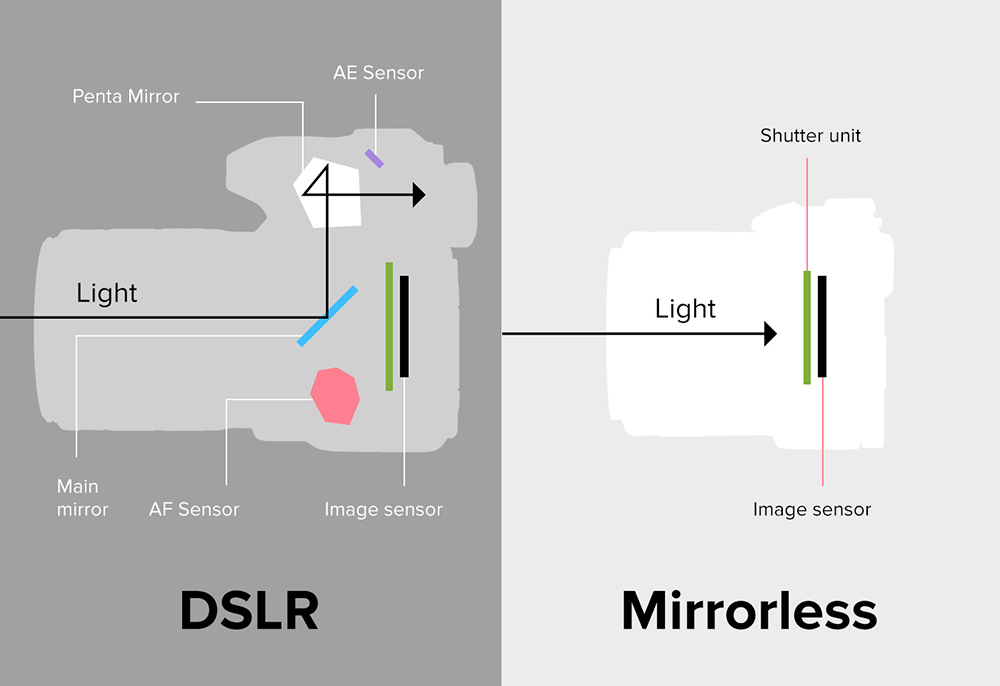
A DSLR, or Digital Single-Lens Reflex camera, uses a mirror mechanism inside the camera body to direct light from the lens toward an optical viewfinder.
When you press the shutter button, the mirror moves out of the way so light can reach the camera sensor and capture the image.
DSLR cameras became the standard choice for serious digital photography for many years and remain capable of producing professional-quality photographs.
Canon and Nikon developed extensive DSLR systems with a large range of cameras and lenses, which means DSLR equipment can still make sense for certain photographers today.
What Is a Mirrorless Camera?
A mirrorless camera removes the traditional internal mirror mechanism found inside a DSLR.
Instead, the image sensor continuously receives light and provides a digital preview through the rear display or electronic viewfinder.
Removing the mirror mechanism gives manufacturers more flexibility when designing camera bodies and allows modern mirrorless systems to integrate advanced autofocus, subject detection and video technologies.
Mirrorless cameras are now available for beginners, enthusiasts, content creators and professional photographers.
Mirrorless vs DSLR: Key Differences
The biggest physical difference is the mirror mechanism, but that difference affects several parts of the shooting experience.
Mirrorless cameras use electronic viewfinders or displays, while traditional DSLRs use optical viewfinders.
Mirrorless systems are often designed around newer autofocus and video technologies, while DSLRs can provide a familiar photography experience with established lens ecosystems.
Camera size, battery performance, lens selection, autofocus and video capabilities can also vary between the two systems.
However, individual camera models should always be compared directly because not every mirrorless camera will outperform every DSLR.
Advantages of Mirrorless Cameras
Modern mirrorless cameras can offer several advantages depending on the model.
Common advantages include:
• Smaller or lighter camera bodies
• Advanced autofocus systems
• Subject and eye detection
• Strong video capabilities
• Electronic viewfinders
• Real-time exposure preview
• Fast continuous shooting options
• Modern lens ecosystems
• Strong hybrid photography and video features
Electronic viewfinders can also help photographers preview exposure, white balance and other settings before taking the photograph.
For content creators who regularly switch between photography and video, mirrorless cameras can provide a particularly flexible platform.
Advantages of DSLR Cameras
DSLR cameras should not automatically be considered outdated or incapable.
A good DSLR can still produce excellent professional photographs.
DSLR cameras can make sense for photographers who:
• Already own compatible DSLR lenses
• Prefer an optical viewfinder
• Are comfortable with DSLR handling
• Find a strong-value camera and lens combination
• Primarily focus on photography
• Do not require the newest video or autofocus technologies
For someone who already owns several compatible lenses and accessories, staying with an existing DSLR system may also be more economical than changing the entire camera ecosystem.
Which Is Better for Beginners?
For someone building a camera system from scratch in 2026, mirrorless is generally the more future-focused platform.
A beginner buying a mirrorless camera can enter an ecosystem that manufacturers are actively developing with newer cameras, lenses and technologies.
However, beginners should not choose a camera based only on whether it is mirrorless.
Consider:
• Camera price
• Lens prices
• Available lenses
• Ease of use
• Camera size and weight
• Photography requirements
• Video requirements
• Future upgrade options
• Total budget for the complete setup
A more affordable camera with the right lens can sometimes be a better choice than spending most of your budget on an expensive camera body.
Which Is Better for Photography?
Both DSLR and mirrorless cameras can produce excellent photographs.
The better choice depends on what you intend to photograph.
Portrait photographers should consider autofocus, lens selection and low-light performance.
Sports and wildlife photographers may prioritize subject tracking, continuous shooting speed, battery performance and telephoto lens availability.
Travel photographers may care more about camera size, weight and versatile lenses.
Product and studio photographers may prioritize resolution, lens quality, lighting compatibility and reliable manual controls.
The DSLR-versus-mirrorless label alone does not determine image quality.
Which Is Better for Video?
Mirrorless cameras generally have an advantage when considering modern hybrid photo and video workflows.
Many newer mirrorless cameras are designed with video creators in mind and can provide advanced autofocus, high-resolution recording, multiple frame-rate options and useful connectivity features.
When comparing cameras for video, consider:
• Video resolution
• Available frame rates
• Autofocus performance
• Stabilization
• Recording formats
• Recording limits
• Overheating behavior
• Microphone input
• Headphone monitoring
• Battery life
• Lens availability
Vloggers, filmmakers, YouTube creators and social media creators should compare these features between individual camera models rather than relying only on the DSLR or mirrorless label.
Which Is Better for Professional Photographers?
Professional photographers should make the decision based on their actual workflow.
A professional who already owns DSLR bodies, professional lenses, flashes and other compatible equipment may not need to replace an entire working system simply because mirrorless technology is newer.
On the other hand, professionals upgrading their equipment may find advantages in newer mirrorless autofocus systems, subject tracking, video capabilities and modern lenses.
Important professional considerations include:
• Autofocus reliability
• Lens availability
• Battery life
• Camera handling
• Weather resistance
• Image quality
• Storage requirements
• Video capabilities
• Existing equipment
• Upgrade costs
The best professional camera is the one that reliably handles the work you actually need to produce.
What About Lenses?
Lenses should be a major part of your DSLR versus mirrorless decision.
Buying an interchangeable-lens camera means entering an entire camera ecosystem.
Before buying a camera body, consider the lenses you may need for:
• Portrait photography
• Wildlife photography
• Sports photography
• Landscape photography
• Travel
• Vlogging
• Product photography
• Video production
If you already own several DSLR lenses, check whether they can continue to be used directly or through a compatible adapter when moving to a mirrorless system.
For new buyers, look at the total cost of the camera and the lenses you expect to purchase rather than evaluating the camera body alone.
Should You Upgrade from DSLR to Mirrorless?
Owning a DSLR does not automatically mean you need to upgrade.
If your current camera provides the image quality, autofocus and performance required for your work, there may be no urgent reason to replace it.
Consider upgrading when a mirrorless camera provides a meaningful advantage for your specific needs.
That could include better subject tracking, improved video capabilities, a smaller setup, access to newer lenses or features that genuinely improve your workflow.
Upgrading should solve a problem or provide a useful benefit, not simply replace equipment because something newer exists.

Mirrorless vs DSLR Cameras in Lebanon
For photographers and creators buying a camera in Lebanon, the decision should include more than camera specifications.
Consider your complete budget, available lenses, accessories, batteries, memory cards, microphones, tripods, gimbals and lighting equipment.
Availability can also influence which camera ecosystem makes the most sense for you.
DSLR Zone offers cameras, lenses and photography accessories in Lebanon for beginners, enthusiasts, professional photographers and content creators.
Comparing the complete setup before purchasing can help you choose equipment that fits both your creative requirements and your budget.
Final Recommendation: Mirrorless or DSLR?
If you are buying your first interchangeable-lens camera in 2026 and building a system from scratch, mirrorless is generally the more future-focused choice.
If you already own DSLR lenses and equipment, or find a DSLR setup that offers excellent value for your photography requirements, a DSLR can still be a practical choice.
Do not choose based only on the technology inside the camera.
Start by defining what you intend to photograph or record, determine your total budget and then compare the complete camera, lens and accessory ecosystem.
The right system is the one that helps you create the work you want without paying for features you do not need.
Frequently Asked Questions
Is mirrorless better than DSLR in 2026?
For most people building a new camera system in 2026, mirrorless is generally the more future-focused choice. However, a DSLR can still provide excellent image quality and may make sense for photographers who already own compatible lenses or find a strong-value setup.
Do DSLR cameras still take good photos?
Yes. DSLR cameras can still produce excellent professional-quality photographs. Image quality depends on the camera, sensor, lens, lighting, settings and photographer rather than simply whether the camera is DSLR or mirrorless.
Is mirrorless better for beginners?
Mirrorless cameras are generally a strong choice for beginners building a new system because they provide access to modern camera and lens ecosystems. Budget, ease of use and lens costs should still be considered.
Is mirrorless better for video?
Many modern mirrorless cameras provide strong video capabilities, advanced autofocus and hybrid photo and video features. However, video performance should always be compared between individual camera models.
Should I replace my DSLR with a mirrorless camera?
Not necessarily. If your DSLR already meets your photography requirements, there may be no urgent reason to replace it. Consider switching when a mirrorless system provides specific features or performance improvements that benefit your workflow.